The ingenuity of scarcity
What an eco-farm in Uruguay taught me about engineering, the R-ladder, and getting back on your feet.
I was working on a closet in my Amsterdam apartment when the message came in. Saw down, mask off, ear protection off.
Allan Intrioni, the founder of Tierra de Sueños, runs an educational eco-farm just outside Montevideo. He had told me no a few weeks earlier. The farm was fully booked months in advance. I'd accepted that and kept searching. But before I gave up entirely I sent one more message: if I can be of any help, I'll be available anyway.
A day later, he came back. A place had opened up. Several volunteers had cancelled when they heard the farm had burned down in December. They wanted to garden or help clean. For me, that news made it more exciting, not less. I was actually needed.
"I'm in," I replied. Just like that.
Tierra de Sueños sits right on the border of Montevideo, further from the city centre than I expected. Allan bought the plot in 2017. He was a software engineer and barman before that. He turned the land into an educational platform, teaching kids and anyone else who shows up how plants grow, how sustainable food systems work, and how aquaponics, hydroponics, and aeroponics can produce food with almost no waste. He has over 50,000 followers on Facebook. The waiting list for volunteers is usually months long.
Then, in December 2025, the farm burned down.
Not all of it. The sleeping quarters survived. The bar survived. The art studio came through with minor roof damage. But the productive side of the farm was gone: the trees, the casas bioclimáticas, the containers full of tools, the big hall that housed the aquaponics, hydroponics, and aeroponics systems. Containers blackened and oxidised by the fire. A burned-out tractor. Rubble piled on top of rubble.
I arrived in March, three months after the fire. I had imagined something like a campsite. I found a construction site.
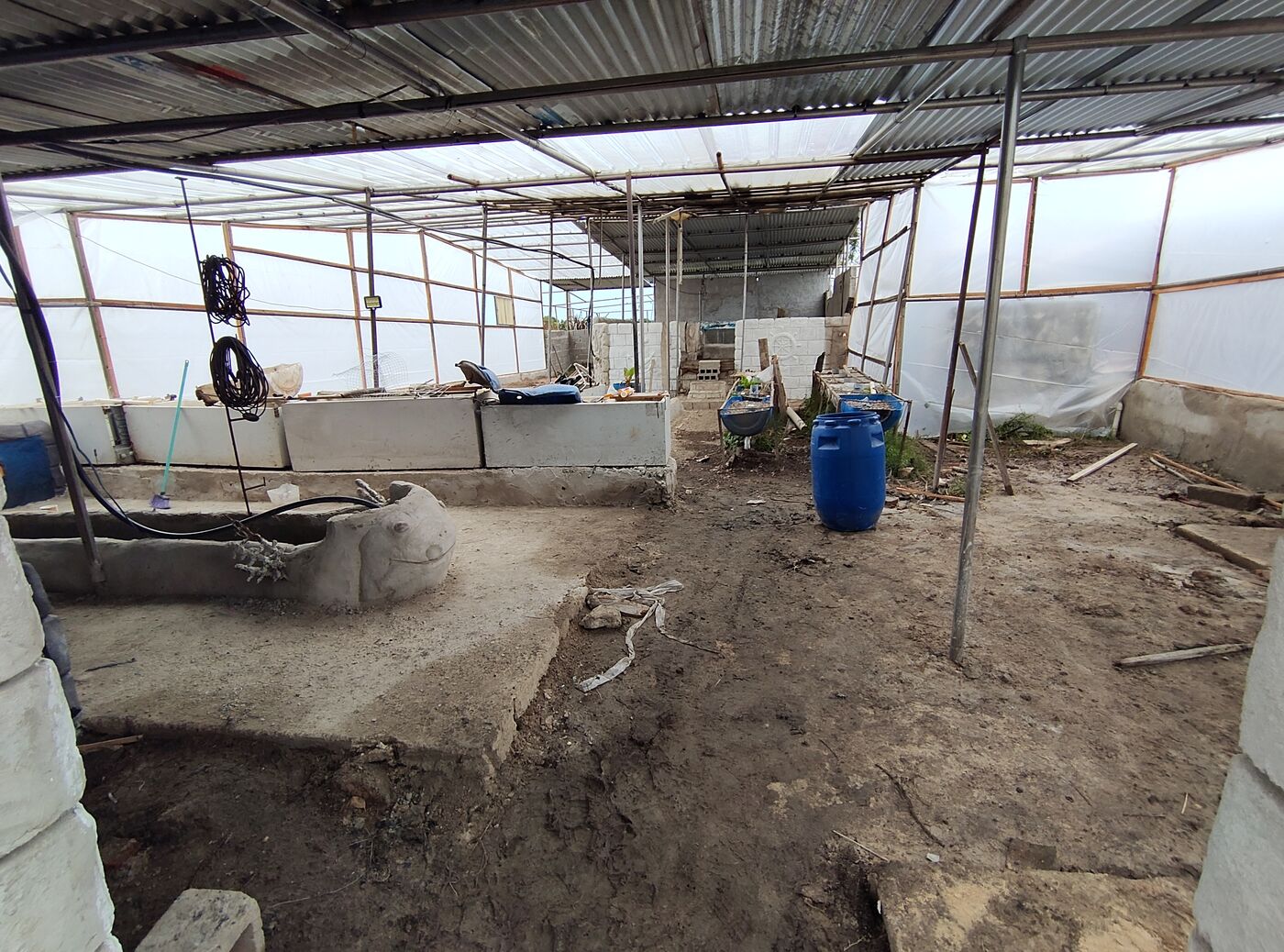
The first weeks I felt permanently dirty and didn't dare wear anything I cared about. But that feeling shifted. My objective stopped being "survive the week to get back to the city" and became something else: make this place functional again.
About two weeks in, we were laying a floor. Cement is expensive and we didn't want to use more than necessary. The solution appeared without much discussion: use the burnt rubble as filler. The debris we'd been stepping around for weeks, the material that couldn't be used for anything else, became structural. No calculation tool. No sustainability framework. Just: what do we have, and what can it become?
In the Netherlands, we have something called the R-ladder. Reduce, reuse, recycle, recover. I'd studied it, written about it, applied it in consulting projects. I understood it as policy. What I hadn't understood until that floor was what it looks like when it's not a framework but a necessity.
Universities teach you to calculate the strength of every last fastener. What they couldn't teach me was the ingenuity that comes from scarcity.
We built entire structures from a drawing on a single A4 sheet of paper. No roof load simulations, no millimetre-precise CAD models, no force analysis. Just "does it seem good enough?" And it was. Because it had to be.
This is not a criticism of engineering education. It taught me how to think. What it couldn't teach me was the ingenuity that comes from scarcity. That's something you learn by doing it.
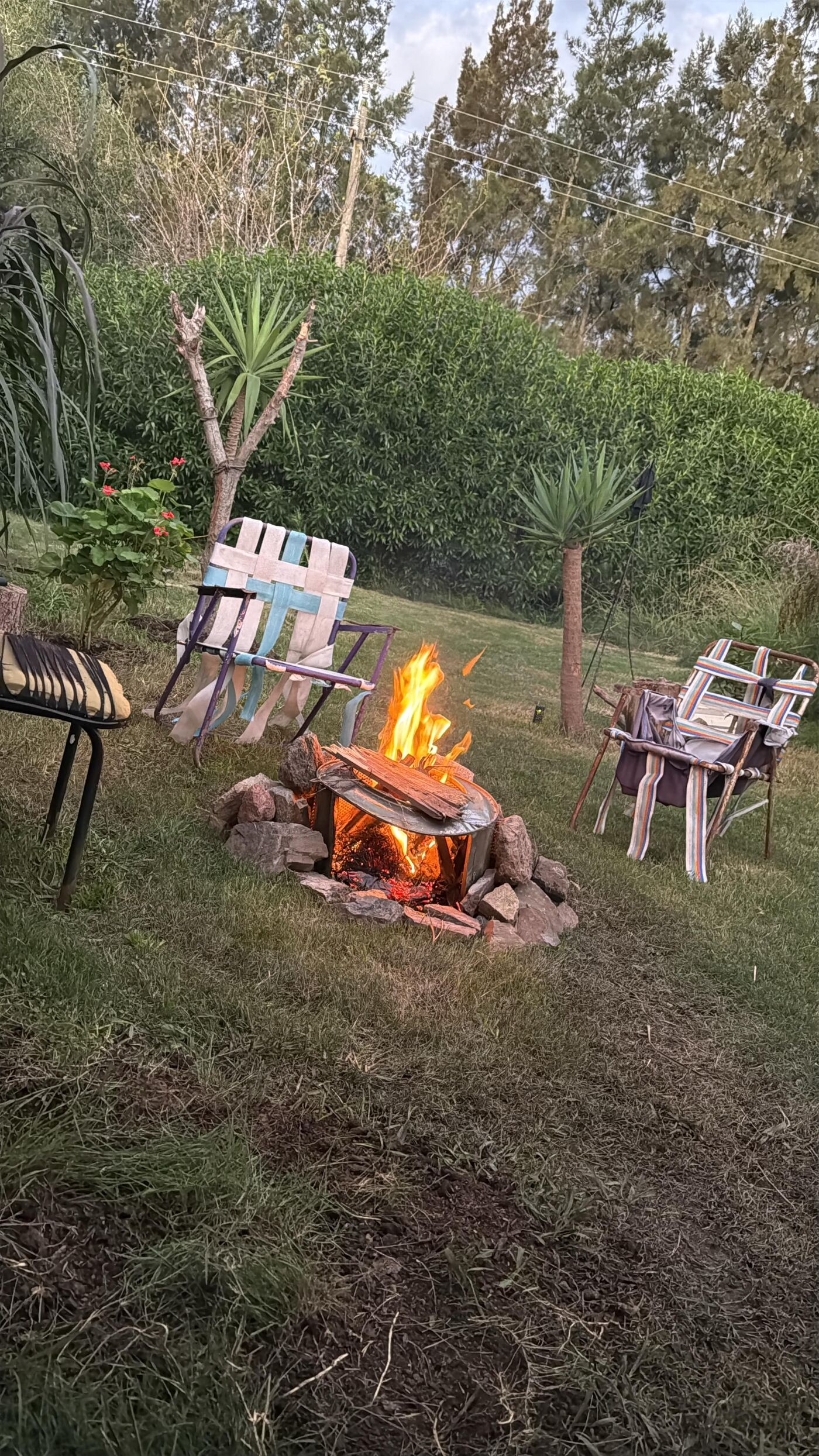
After a month and a half, I was dismantling old fridges and turning them into plant pots. We took apart a washing machine and used the drum as the base of a fireplace. Then we built a second working washing machine out of two broken ones. It worked. Not elegantly. But it worked.
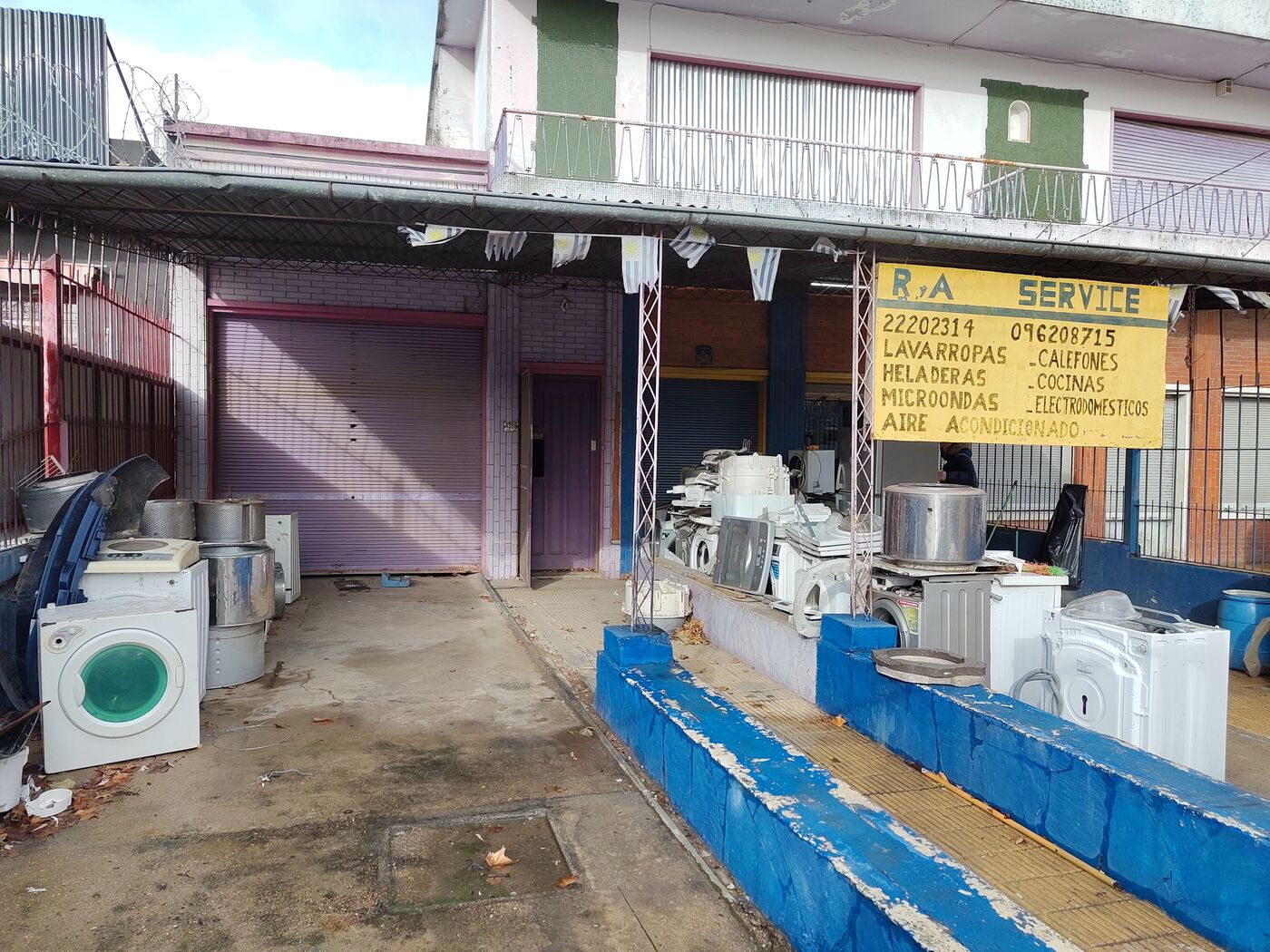
I've since moved into Montevideo to learn Spanish and look for work closer to the city. And I see the same logic everywhere. Marketplaces full of broken appliances. Stores selling non-functioning fridges and washing machines. At first it seemed chaotic. Now I understand it differently. Trash isn't trash here. It's inventory.
This is partly why Uruguay is one of the only developed countries in the world with an Earth Overshoot Day in December, near the end of the year. Most developed countries hit theirs in spring or summer. Uruguay's falls later because consumption patterns here haven't been engineered away from resourcefulness yet. More on that in a future post.
Allan is still there, rebuilding. He was hurting when I was with him. A knee problem he'd ignored for too long because he cared too much about the project to stop. What he's building creates a net positive in the world. That's rare enough to be worth something.
I arrived at Tierra de Sueños not knowing what to expect. I'm leaving having experienced what it takes to get back on your feet after a serious fall.
Tierra de Sueños got back up fast. That was something to witness.